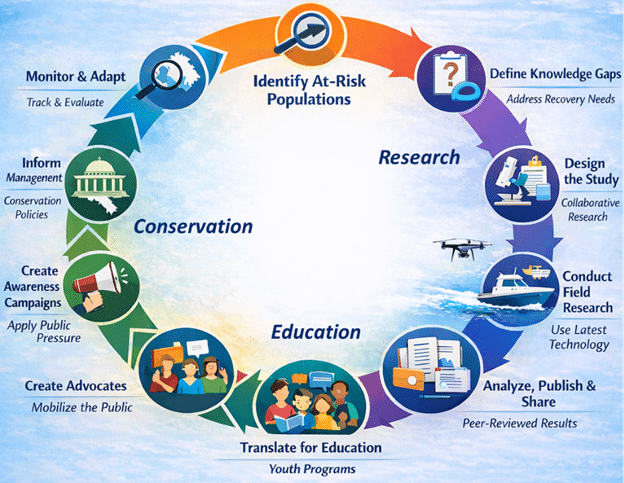
Scientific research is often a long-term commitment; some studies take years, even decades, to complete. At Pacific Whale Foundation (PWF), some of our research has been ongoing for over 45 years. This enduring dedication reflects our mission: to protect whale and dolphin populations through a powerful blend of science, education, and conservation. From identifying at-risk species to influencing global policy, our work is designed to create lasting, measurable change. With a finely tuned science-to-action pipeline, we ensure that every dollar spent drives impact, and every action moves us closer to healthier marine ecosystems.
Step 1: Identifying Populations Most at Risk
Before we can protect whales and dolphins, we must first understand which species or populations are most at risk. Our scientists assess population abundance, trends, and threats to identify the species and regions most in need of conservation. This science-driven approach ensures we prioritize efforts where they’ll have the greatest impact.
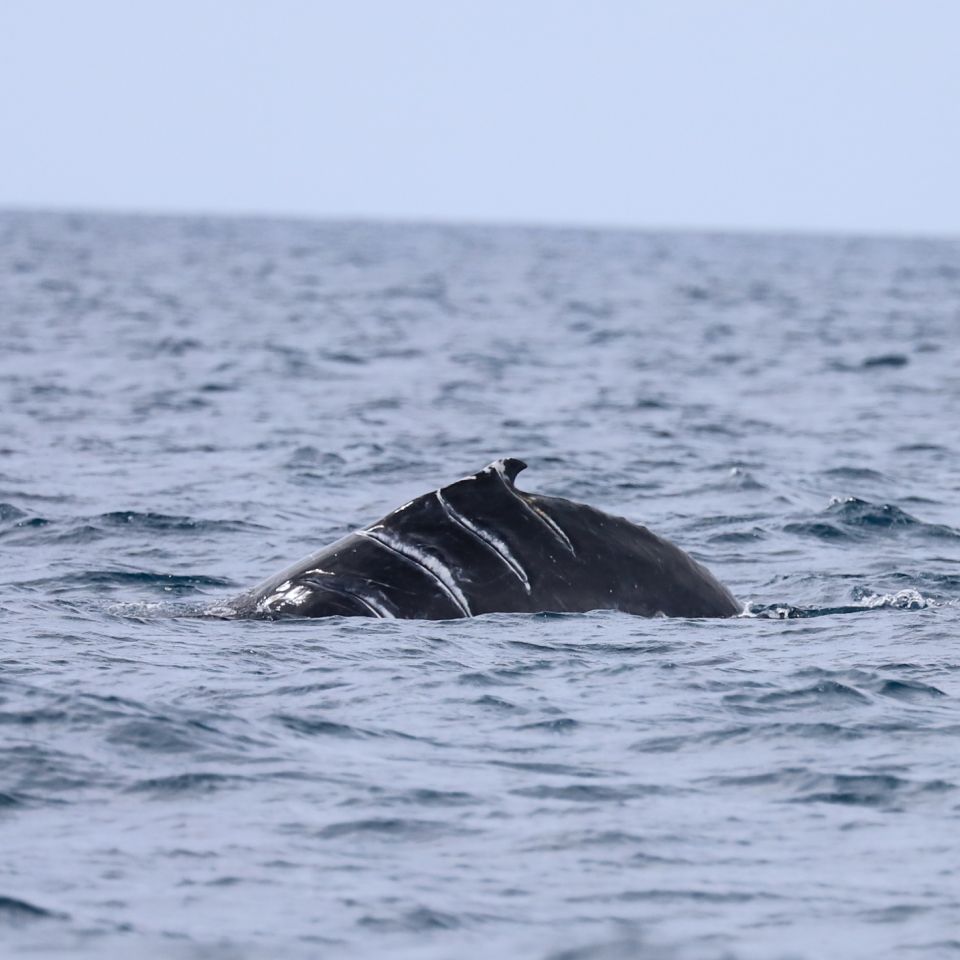
In 2014, this led us to focus on the growing threat of vessel collisions and harassment involving humpback whales in Hawaiʻi. Each year, incidents are reported—often involving vulnerable calves and subadults. With these events rising, particularly in high-traffic areas like Maui Nui, it became clear this population required immediate, targeted action.
Step 2: Defining the Science Needed for Recovery
Once we know which whales are most at risk, the next step is to understand what’s missing. We work closely with management agencies like NOAA in the USA to identify key knowledge gaps—the unanswered questions that stand between at-risk populations and meaningful protection.
In the case of Hawaiʻi’s humpback whales, vessel collisions were already a recognized threat. Existing regulations required boats to stay 100 yards away from whales, but no research had confirmed whether that distance effectively minimized disturbance—or whether whales were affected well beyond that range. At the same time, managers lacked published, quantitative data on how vessel speed influenced a captain’s ability to detect and avoid whales in time—particularly for smaller, fast-moving vessels in high-risk areas like Maui Nui.
It became clear that science was needed to answer the following questions:
1) What is the safest travel speed to reduce collisions?
2) How can vessels operate around whales without altering their natural behavior?

Step 3: Designing the Study
Once we know what questions need answering, we design the studies to do just that. We collaborate with partners, utilizing the latest technology, standardizing methods, and developing studies that generate credible, decision-ready science. To address rising vessel-related threats to humpback whales in Hawaiʻi, we developed two now published complementary, management-focused studies:
Collision Risk & Speed Thresholds:
We conducted vessel-based surveys that varied speed, sighting angle, and conditions to pinpoint when small boats can reliably detect whales in time to avoid a strike.
Behavioral Disturbance from Vessels:
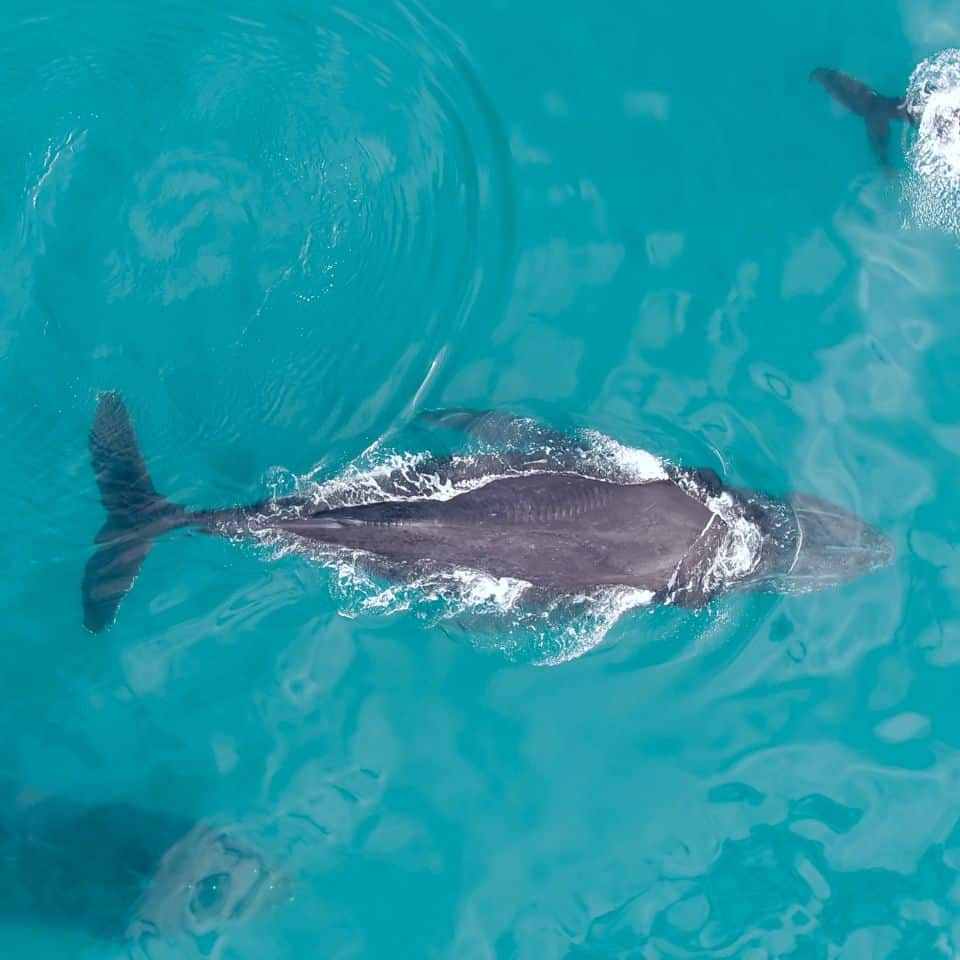
Using land-based theodolite tracking, we observed whale behavior from a distance—capturing respiration, swim speed and direction, and dive patterns at various vessel distances without a research vessel interfering with the animals.