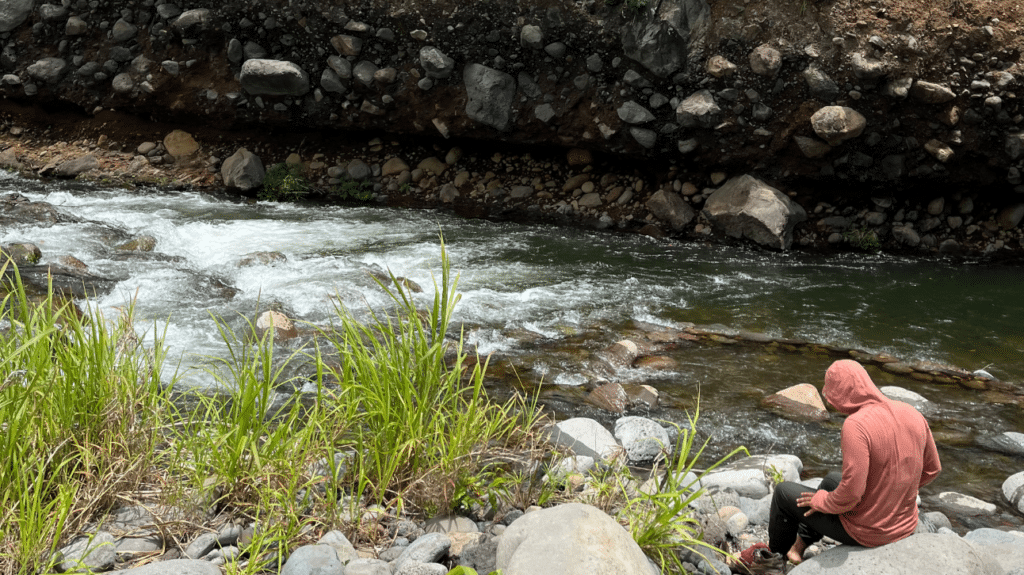
Canoe plants, taro patches, medicinal gardens, and a river that keeps calling people back. This is what mālama ʻāina looks like in Waiheʻe.
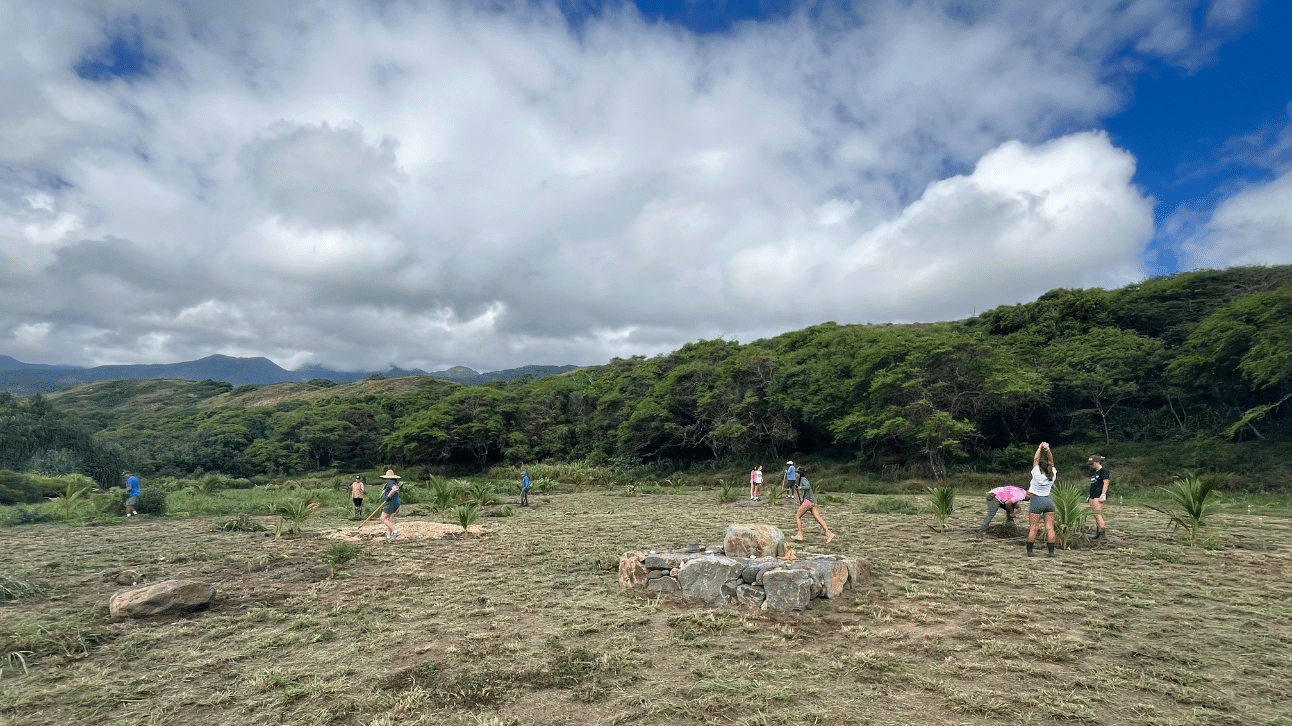
Earlier this year in January, a group of volunteers laid out 44 triangular motu (small planting islands) across the sand at Hawaiʻi Land Trust’s Waiheʻe Coastal Dunes refuge. Each motu was carefully spaced to prevent cross-pollination among more than 20 varieties of niu (coconut), that would soon go into the ground. The number of trees was no accident: 133 niu, one for each year since the illegal overthrow of the Hawaiian Kingdom under Queen Liliʻuoʻkalani.
It was a quiet, deliberate way to begin nine months of work that would move between coastline, riverbank, and taro patch.
A Grove with Meaning
That January planting day launched a project with stakes beyond a single refuge.
Niu varieties across Hawaiʻi are being lost to invasive species and development, and the grove at Waiheʻe was designed as a living seed bank, a place where more than a dozen coconut varieties from across Maui could be protected and perpetuated for future generations. In February, volunteers were back in the grove weeding around the young trees, work made more urgent by the spread of the coconut rhinoceros beetle, an invasive pest putting increasing pressure on coconut populations statewide. Every weeding session is, in effect, protecting genetic diversity that took decades to gather in one place.
By August, volunteers returned to mulch those same niu trees which served as a meaningful full-circle moment from the January planting. Though coconut palms are not endemic to the Hawaiian Islands, they arrived with the voyagers who first sailed from French Polynesia into the archipelago, carrying plants essential to their survival. These “canoe plants,” as they are known, made the long ocean journey alongside the people who planted and tended them, and are regarded today with the same cultural respect and importance as native species. Caring for them at Waiheʻeʻe is caring for that living legacy.
Life Along the Waiheʻe River
In March, the work shifted to the banks of the Waiheʻe River, where volunteers watered native and culturally significant plants, kukui, noni, and kalo, in the mala patches and cleared invasive grasses to make room for more native growth. It was hot, hands-on work, and the day ended the way many did that spring: with volunteers cooling off in the river.
April brought a different kind of lesson. Heavy rainfall from Kona storms flooded the refuge, and for a moment, volunteers could see what the wetlands and loko iʻa kalo (an inland fishpond system) once looked like before water was diverted from the area generations ago. These systems sustained Hawaiian communities for hundreds of years, and Hawaiʻi Land Trust, working alongside Ka Poholima Kāʻeʻo, has been steadily revitalizing the area and the traditional practices tied to it.
Building a Wall by Hand
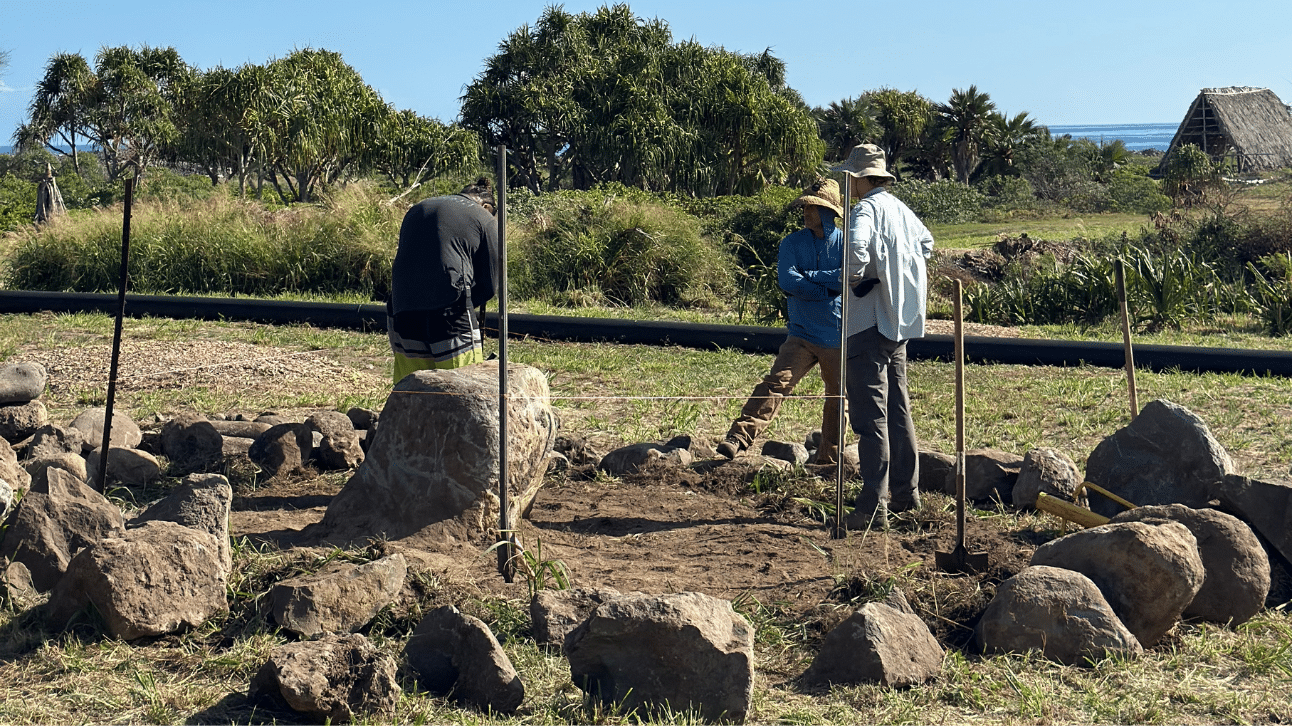
That same April day, a separate group of volunteers headed to Kalaehoʻomano, near the mouth of Waiheʻeʻe Stream, to prep ground for a retaining wall. The work was foundational in the most literal sense: collecting rocks of every size, weeding, and digging the trench that would make the actual wall-building easier in the weeks ahead.
By May, that wall began to take shape, built entirely without modern tools, following traditional Hawaiian dry-stack methods.
Volunteers were welcomed with cultural introductions and a chance to share their intentions before placing the larger rocks by hand. Smaller stones were wedged between them to “cement” the bigger rocks in place, with the goal of a structure that could last for generations around the māla, or garden.
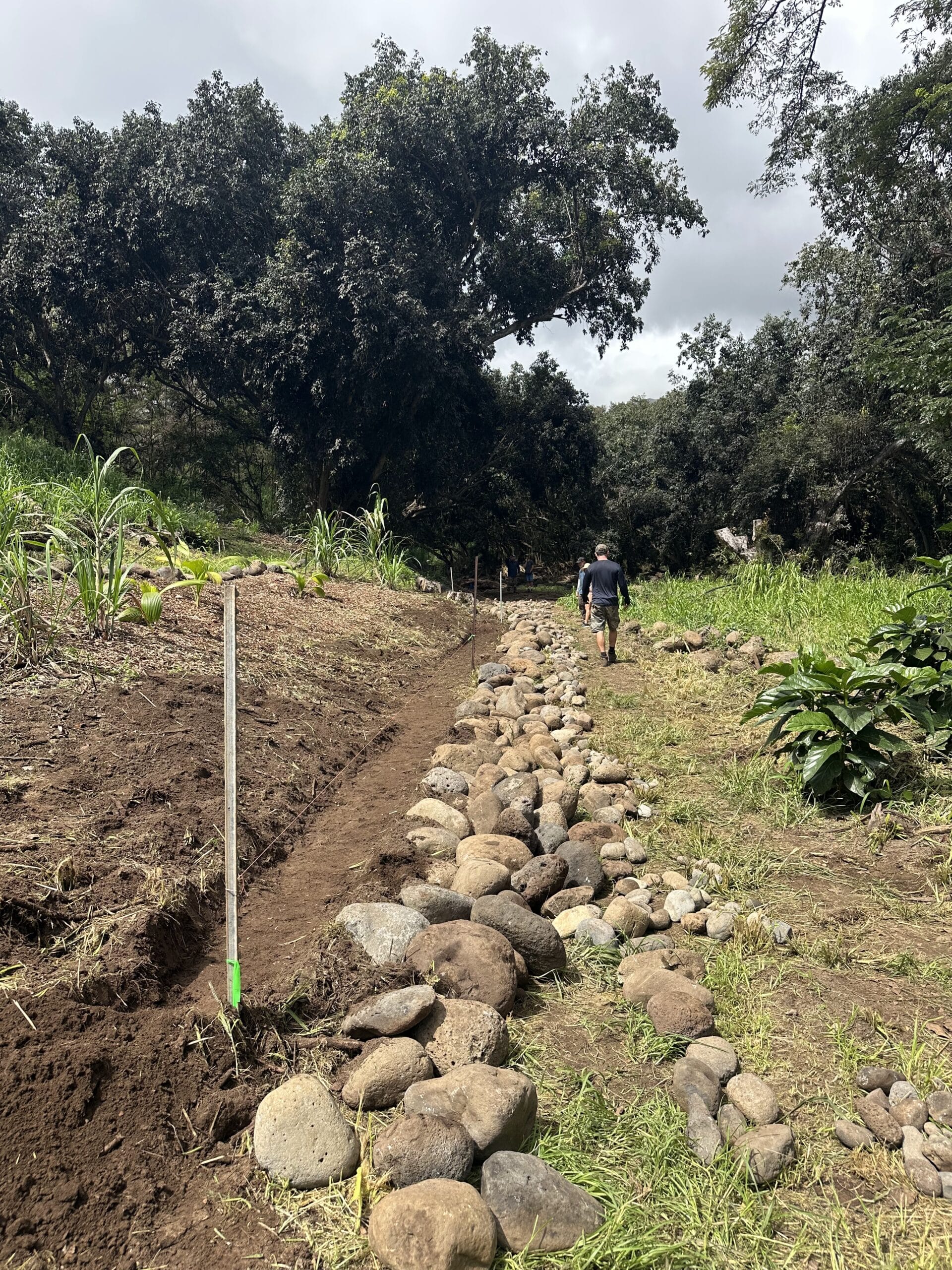
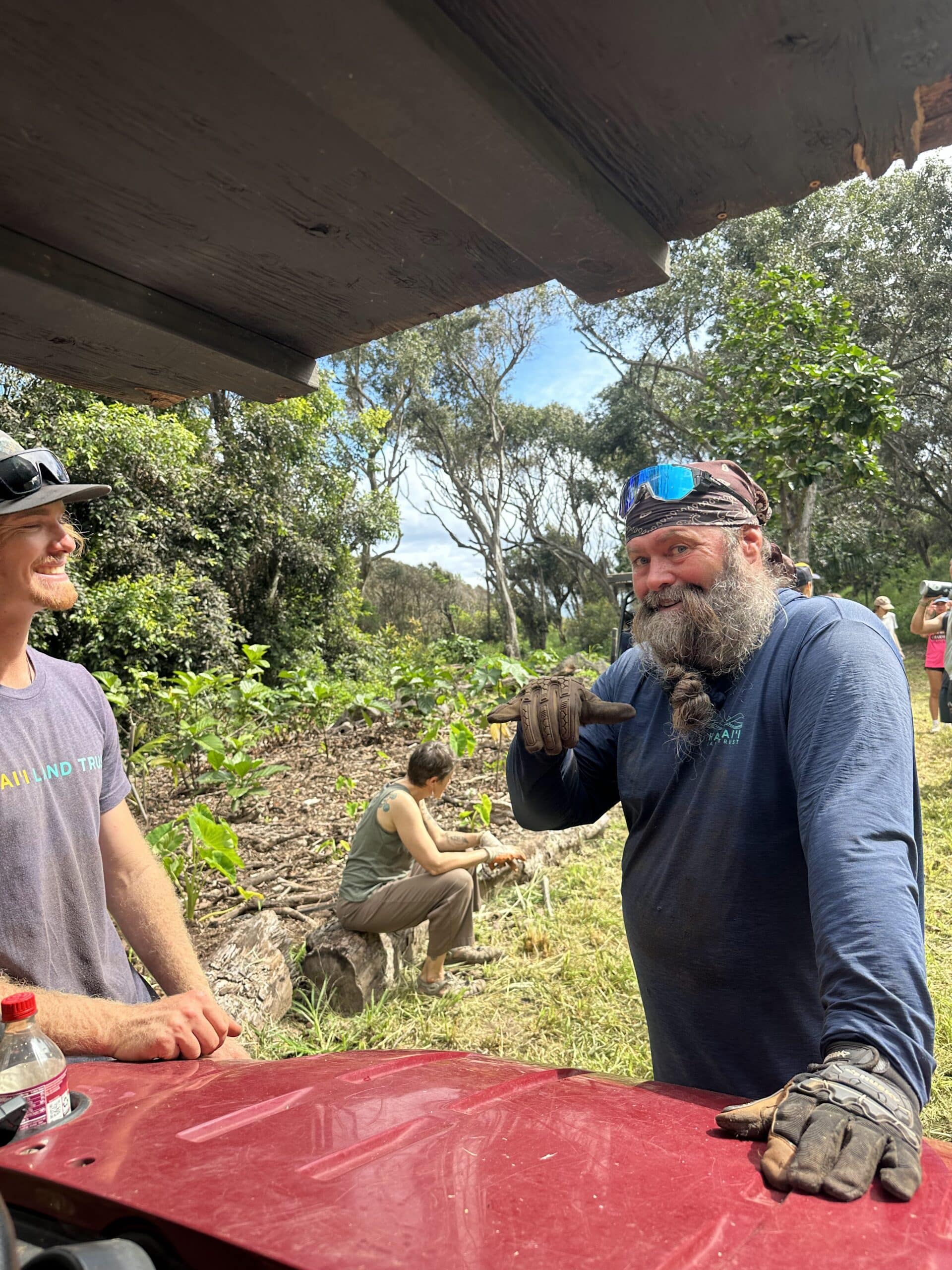
June brought a particularly large group of volunteers and a full day’s worth of progress: weeding botanical patches to give native plants room to flourish under an established canopy, then returning to the wall itself. Part of maintaining a dry-stack wall built the traditional way is periodically moving the stones as tall grass creeps in underneath, laying down a “weed bed,” and resetting the stones. This is a small but essential step for the wall’s long-term integrity. That day’s work wrapped up at the riverbed, gathering stones for the next 30-foot section still to come.
From Loʻiʻ to Table
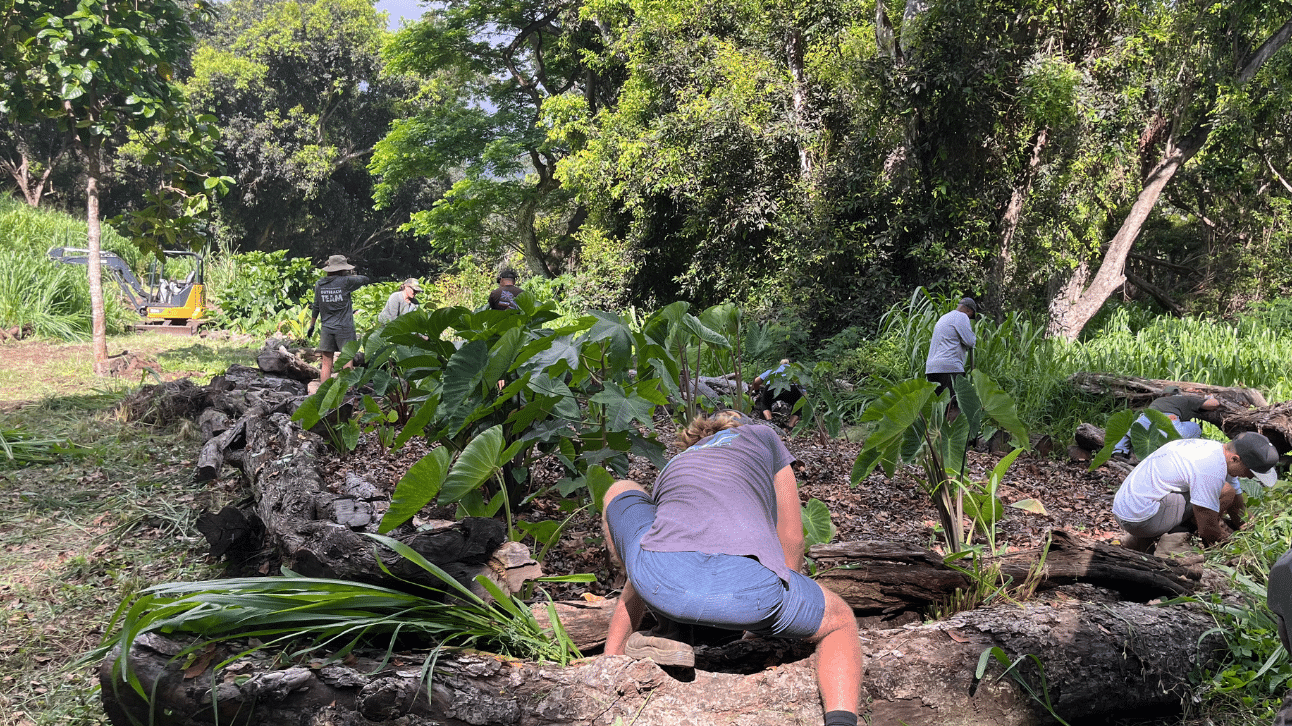
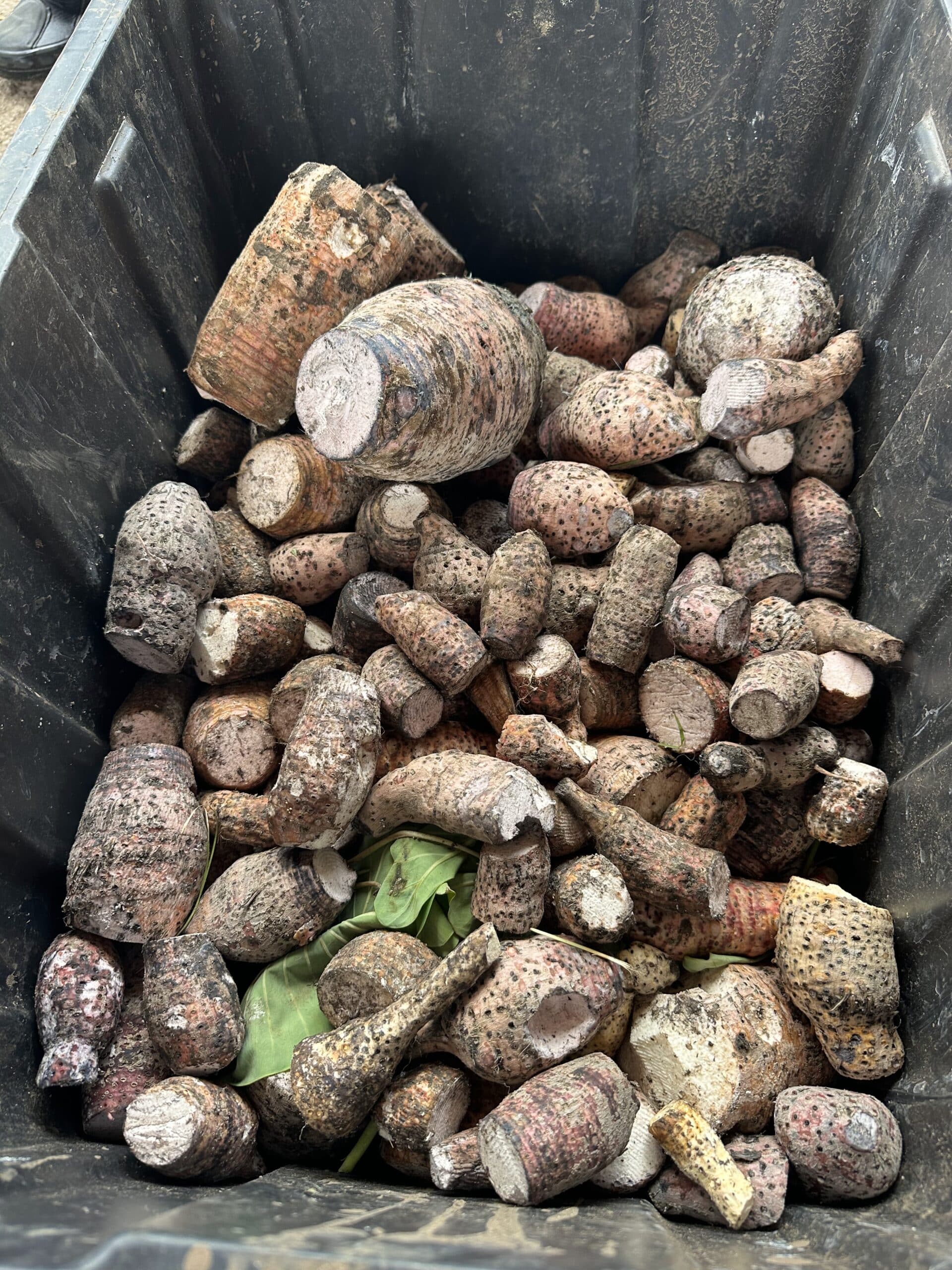
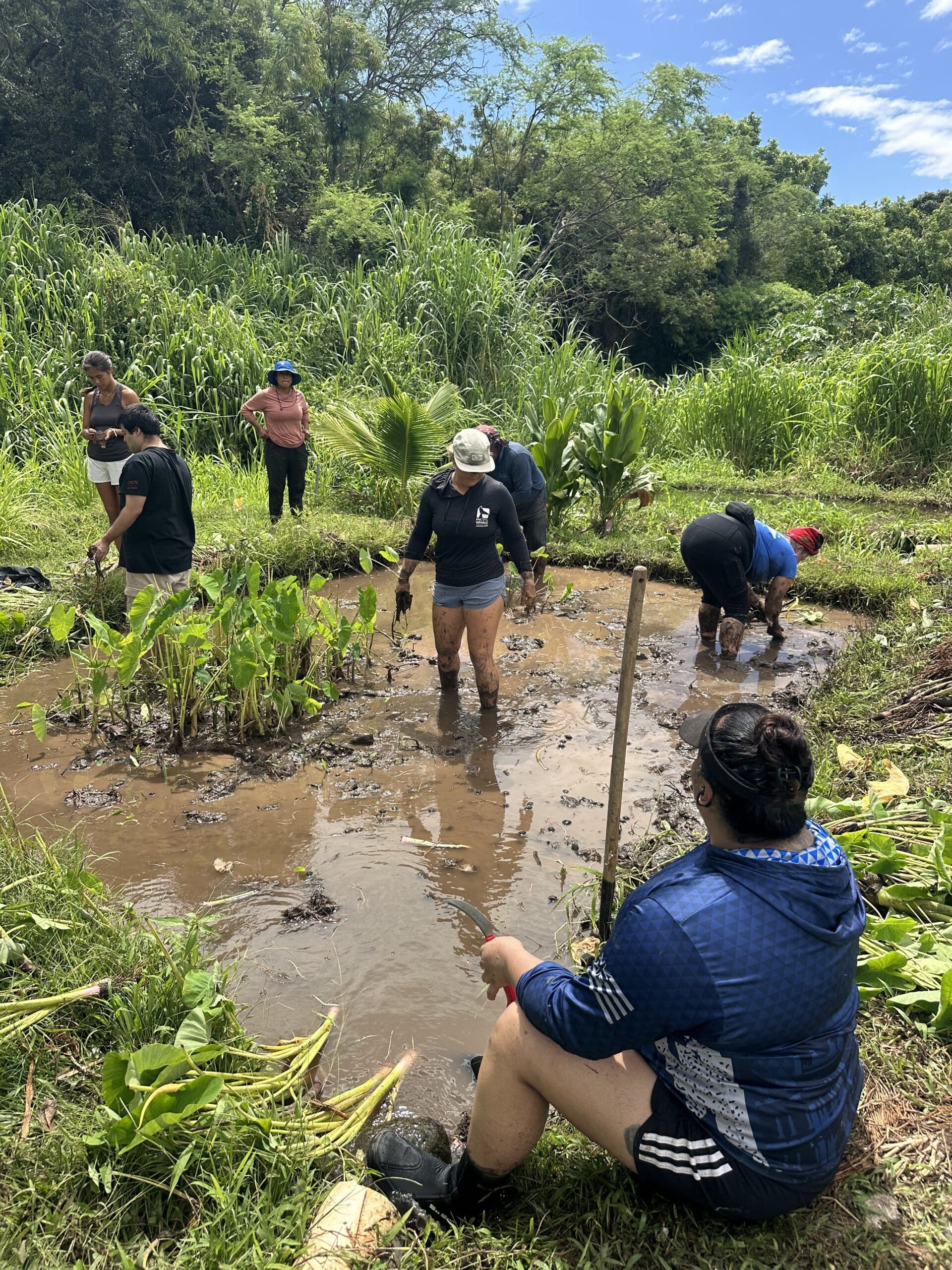
Late June marked a shift from building to harvesting. Volunteers helped bring in kalo from the loʻi, learning firsthand about a plant that was once a staple food for all of Hawaiʻi’s population; grown, harvested, and prepared straight from the ʻāina.
It was slow, team-oriented work, the kind that leaves people with real appreciation for the generations of ʻāina stewards who came before. The day ended, as many at Waiheʻeʻe do, with a dip in the river and conversation about what brought everyone to the same taro patch.
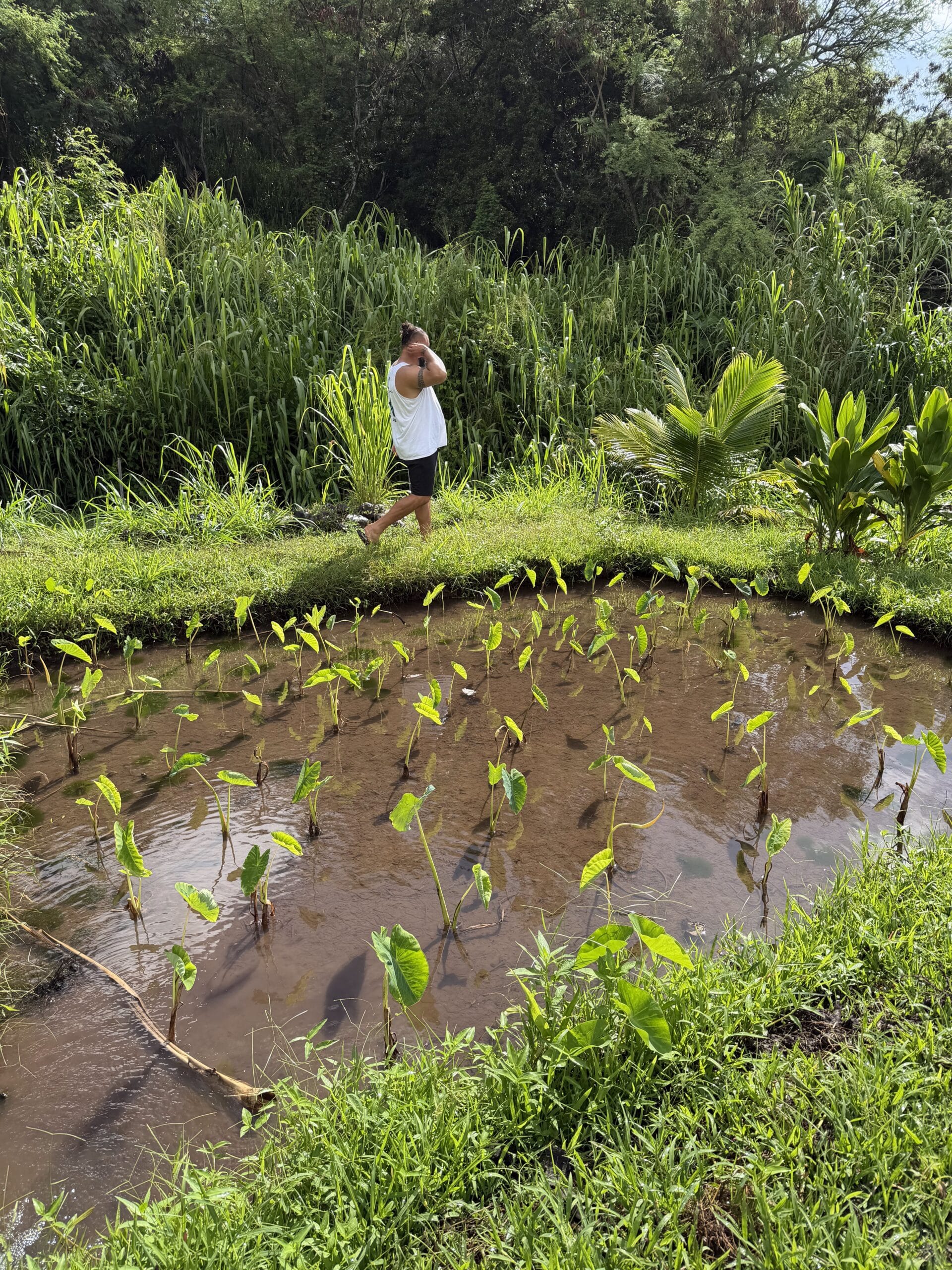
In July, volunteers returned to the loʻi to weed existing beds and plant two additional patches — work directly aligned with the goals of the Mālama Pono program: building community while learning to care for the land.
Seeing that mission play out under the Waiheʻeʻe Ahupuaʻa, volunteers said, made the day feel especially worthwhile.
New Partnerships, Deepening Roots
July marked two firsts for our Conservation and Outreach team. We launched a new partnership with Norwegian Cruise Line (NCL), whose crew joined us at the Waiheʻeʻe Refuge to learn about the land and the restoration work happening there while their ship was on charter through the islands. It was an early step, but one full of promise.
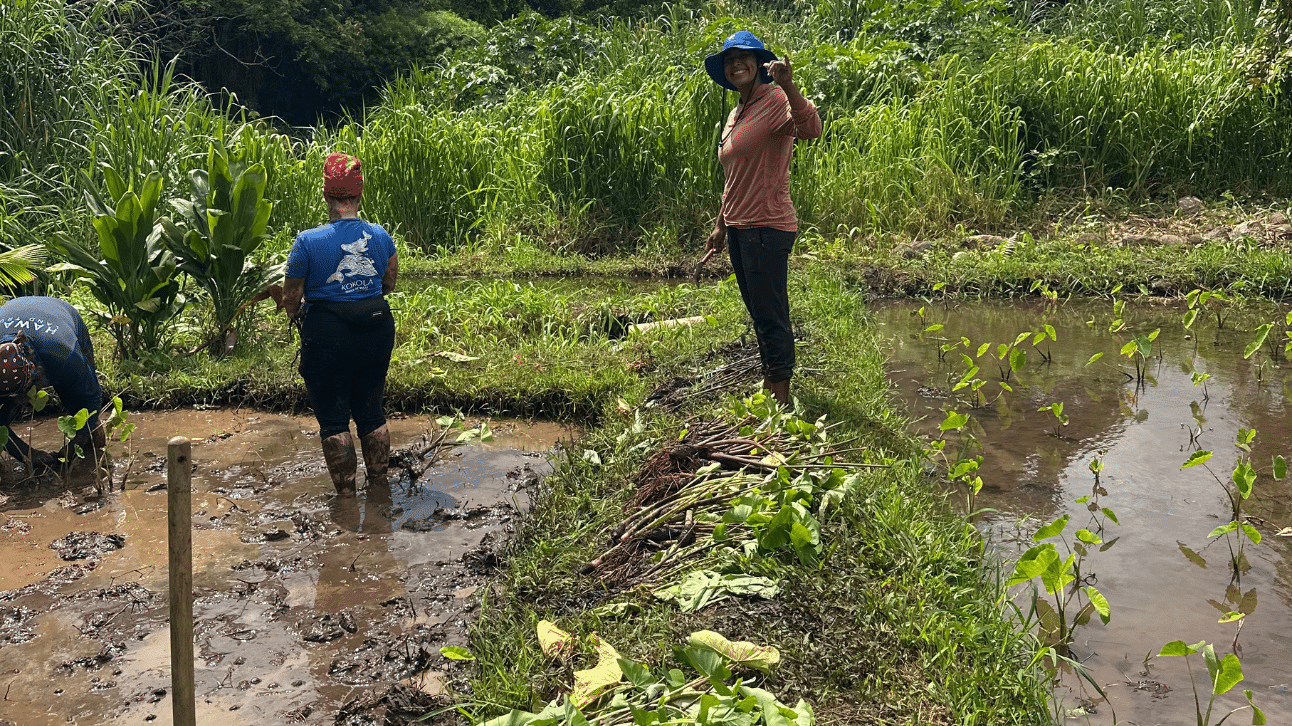
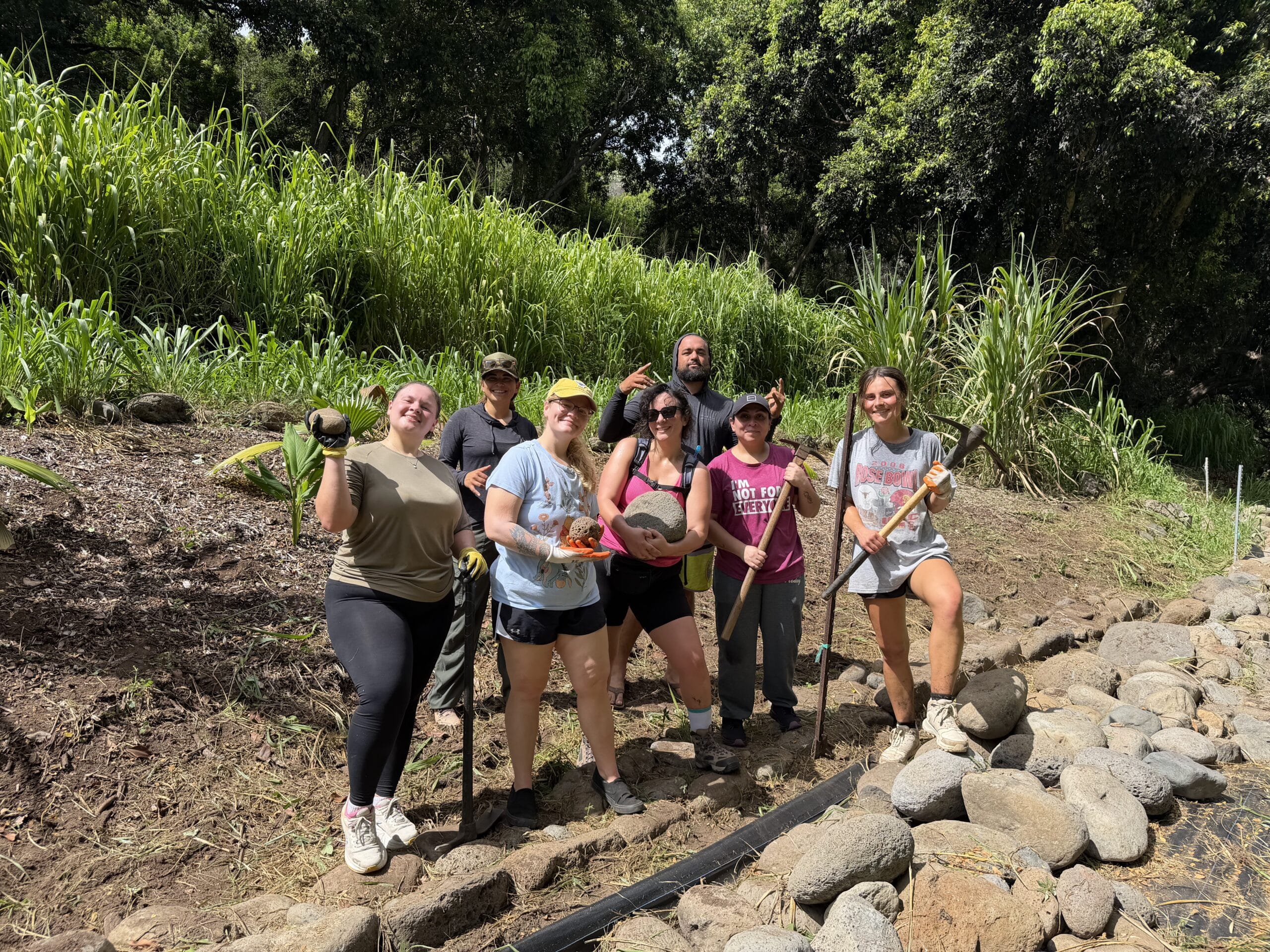
By August, that partnership had already deepened. Our second Mālama Pono event with NCL took place at the Waiheʻeʻe Coastal Dunes and Wetlands Refuge, where a crew of seven, helped mulch a new area being prepared as a medicinal plant and food garden.
What made the day stand out was not just the work itself but the intention behind it. Before beginning, the group paused to practice protocol: a few moments for each person to voice their intentions, asking for permission to enter a place of deep significance. That practice, volunteers shared, brought a sense of peace and presence to the work that grounded everything that followed.
Why People Keep Coming Back
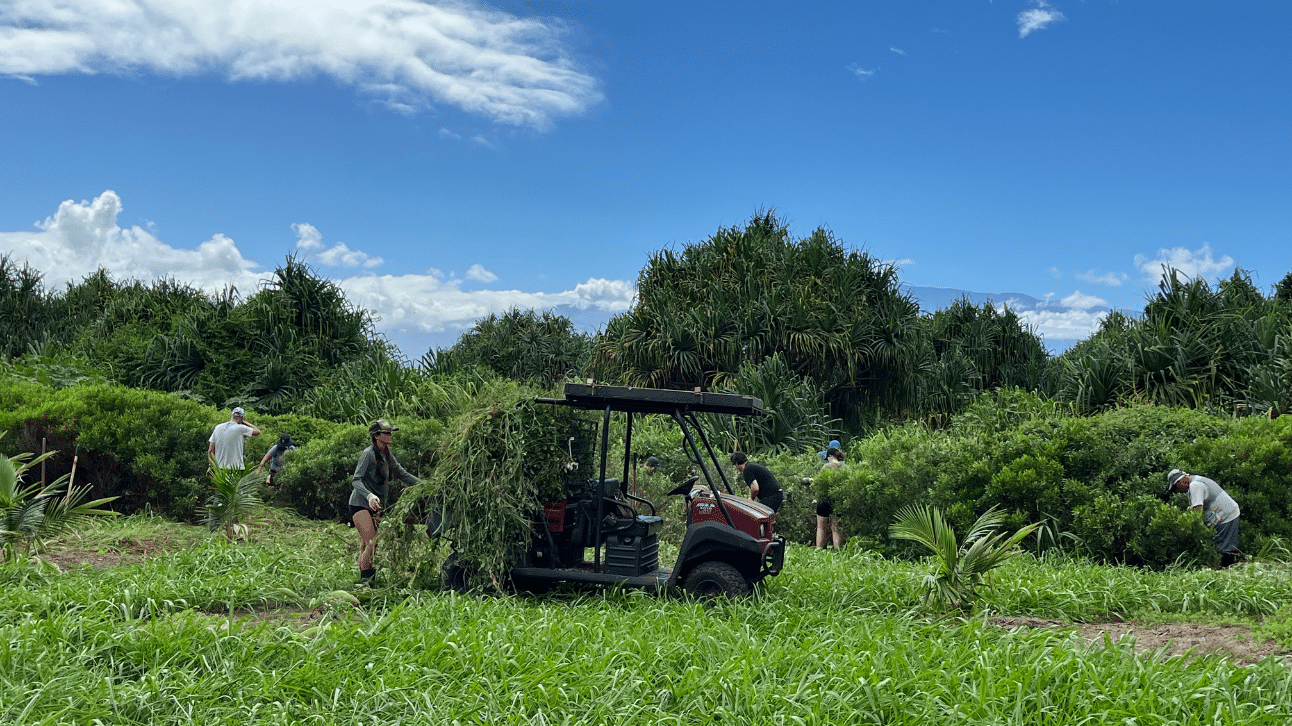
A late August day at Waiheʻeʻe Coastal Dunes captured something that nine months of field notes can only gesture toward. HILT’s community volunteer Fridays run multiple projects simultaneously. Many hands, many tasks, one shared landscape — and the energy that comes from that kind of collective effort is hard to describe but easy to feel.
Leaving a place better than you found it matters. But understanding, deeply and culturally is why that work is necessary is what transforms a volunteer day into something lasting.
Stepping back to ask questions. Learning the name of the person working beside you. Cooling off in the river at the end of a long morning. These are the things that bring people back to HILT and to this beautiful stretch of land on the east side of Maui, week after week.
How You Can Help
Nine months of coconut groves, riverbanks, rock walls, taro patches, and medicinal gardens only happen with volunteers willing to keep showing up.
If you’d like to join the next round of work with Hawaiʻi Land Trust, planting, weeding, or building alongside our team, it would be an honor if you joined us.