
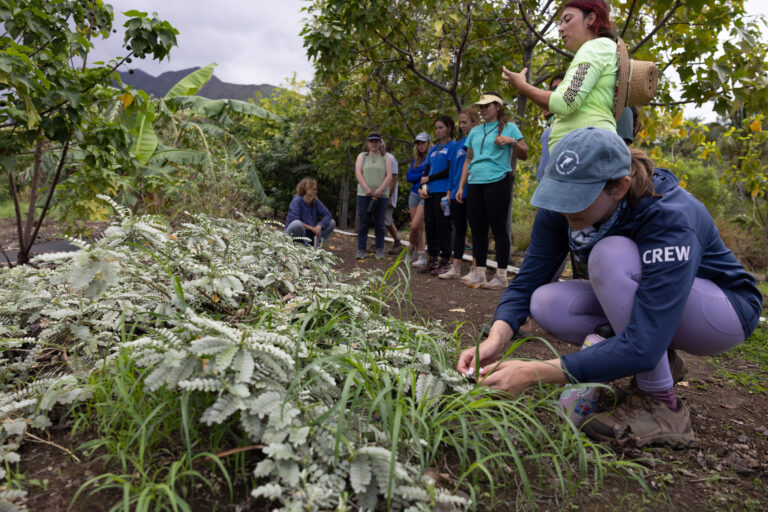
A deeper connection to the place you occupy cannot be bought, it must be earned. Join our Mālama Pono program to learn how volunteering at local non-profits can help the ʻāina, the community, and most importantly, yourself.
At Kīpuka Olowalu, you start the day with gratitude, connection, hand tools, excessive sunscreen, and an attitude to save the world. The host explains the evolution of native plants that took millions of years to adapt to this special place. Most of those plant names you can’t pronounce. Yet.
The name of the game is replacing invasive weeds with endemic species, but you are humbled quickly when you experience the grit of the invasive Hawaiian Mesquite, kiawe. The kiawe tree can grow to 1,000 years old, grow in lava rocks, water, and sand, and now occupies 155,000 acres in the Hawaiian Islands.
The Department of Forestry and Wildlife shares how their lands are taken over by kiawe and the creative ways they remove it. But if you want to build the MOST sweat equity, all you need is a shovel, too much coffee, and a plan.
You may have signed up for a stronger social connection with other Earth loving enthusiasts or because you mistakenly thought you would be volunteering with whales, but you leave with a heart filled with adventure, accomplishment, purpose, and sunburn.
So if youʻre deciding between being a couch potato and saving the earth, think of that “I made a difference” feeling you got from your Mālama Pono experience.
Hawaiian Language Key
ʻĀina – the land
Malama Pono – To take care
Kiawe – Hawaiian Mesquite Tree
Kīpuka Olowalu – The land oasis of Olowalu