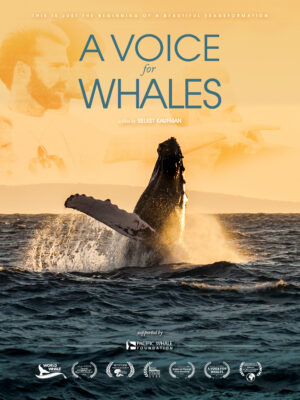
Author of numerous books and scientific publications on cetaceans, Pacific Whale Foundation Founder Greg Kaufman was a pioneer in noninvasive humpback whale research off Maui, Hawai‘i, in the mid-1970s.
Upon founding the Maui-based nonprofit in 1980, he directed the new organization to employ scientific data and research to educate the public about whales and their ocean habitat. A driven and committed conservationist, he also oversaw the longest running humpback whale research programs off Australia, (established 1984) and Ecuador, serving as PWF’s executive director until his death in 2018.
An innovator in sustainable marine ecotourism and one of the world’s leading whale-protection advocates, Greg was a highly sought-after advisor to governments, agencies and other stakeholders on best practices for responsible dolphin- and whale-watching operations.
In addition to contributing to the International Whaling Commission’s Scientific Sub-Committee on Whale-watching, Southern Hemisphere Whales, and Bycatch, Greg served on the Hawaiian Island Humpback National Marine Sanctuary Advisory Committee, represented the U.S. at an international workshop on whale-watching, co-led the United Nations Environmental Programme’s Regional Workshop on Marine Mammal Watching in the Wider Caribbean Region, and was a contributing member of the Southern Oceans Research Partnership.
Watch A Voice for Whales full documentary
Hawaiʻi’s Imperiled False Killer Whales Are Going Hungry
June 16, 2026 | Honolulu Civil Beat
A false killer whale that researchers call “PWF#0109” shed about 500 pounds in just 10 weeks as it sought the increasingly scarce mahimahi, ono and other large fish it needed to survive in the waters off the Main Hawaiian Islands, according to new research.
Hawaii’s False Killer Whales Are Wasting Away
June 10, 2026 | Nautilus
False killer whales, so named for their broad, rounded heads, have a one-of-a-kind feeding collaboration. In their “carousel” hunting mode, a dozen or more of them herd schools of fish into a ball and take turns striking them with their tail flukes.
False Killer Whales In One Of The Last Groups On Earth Are Declining Fast At 3.5 Percent Per Year
June 9, 2026 | IFL Science
How do you monitor the health of a wild marine mammal – or how about 139? For researchers in Hawai‘i working with an endangered false killer whale (Pseudorca crassidens) population, the answer has been drone photography. But the photographs have revealed surprising insights into the body condition of the false killer whales year over year, and unfortunately it’s not looking good.
Hawaiʻi’s endangered false killer whales show signs of nutritional stress
June 5, 2026 | University of Hawaii News
Some of Hawaiʻi’s endangered false killer whales are rapidly losing weight, a warning sign that warming oceans and limited prey may be pushing one of the nation’s smallest whale populations closer to extinction, according to research published in Endangered Species Research by a team including scientists from the University of Hawaiʻi at Mānoa.
Only 139 Left: Research Shows Hawaii’s Rarest Whales Running Out Of Food
June 8, 2026 | StudyFinds
Off the coast of Maui, a small group of some of the rarest whales on Earth is quietly disappearing, and scientists now have a new window into just how dire things have gotten.
False Killer Whales in Hawaiʻi Are Rapidly Declining, With Fewer Than 140 Individuals Remaining
June 5, 2026 | Discover Magazine
False killer whales that call the Hawaiian Islands home are remarkable apex predators and an important part of Hawaiian culture. But they are also in trouble. The only surviving member of the genus Pseudorca is now represented by just around 140 individuals in Hawaiʻi, making this population the smallest and most endangered whale population in the United States.
Hawaiʻi’s Last False Killer Whales Are Starving in a Warming Sea
June 6, 2026 | Wild Science
From a few hundred feet up, a drone can read a whale’s body the way a doctor reads a chart. Width at the head, width across the midsection, the long taper toward the flukes: feed those numbers into the right equations and you get volume, and from volume, an estimate of mass.
Endangered Hawaiian whales are losing hundreds of pounds in just weeks
June 5, 2026 | Earth.com
Only about 139 Hawaiian false killer whales remain. Scientists estimate that the entire population could fit inside a city bus. These whales roam vast waters around Hawaii, yet their numbers continue to decline.
Hawai’i’s last false killer whales threatened by nutritional stress and warming seas
June 5, 2026 | Phys.org
A seven-year collaborative study has revealed alarming fluctuations in the health of Hawaii’s endangered insular false killer whales, with some individuals losing nearly a quarter of their body weight in just a few months. Published in Endangered Species Research, the findings provide the first quantitative evidence that nutritional stress and environmental shifts may be driving the decline of this iconic population, which now numbers fewer than 140 individuals.

