2026 interns and students
Sara Mach, Research Intern
Malena Mogwitz, Research Intern
Minju Sung, Co-op Student
Mia Heyer-Fogelberg, Research Intern
Program Overview
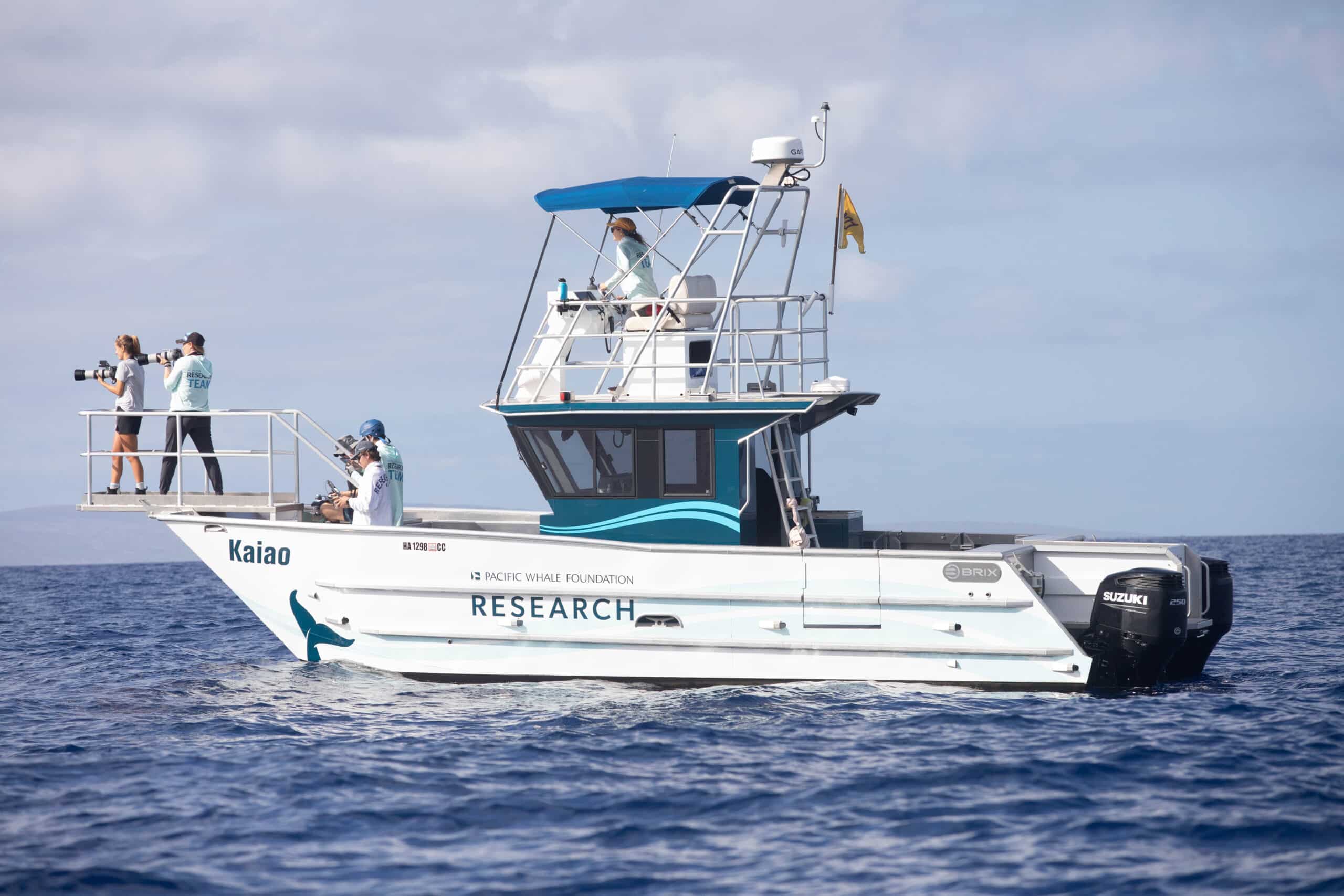
Pacific Whale Foundation offers a Research Internship Program providing hands-on experience in marine mammal research, with interns supported by a $1,000/month stipend. This full-time, immersive program is based in Maui, Hawaiʻi, and provides students and recent graduates the opportunity to contribute meaningfully to ongoing whale and dolphin research while developing practical research skills.
Interns work closely with Pacific Whale Foundation’s research staff on long-term studies of whales and dolphins, supporting both office-based data processing and boat-based research activities.
Internship Sessions
We will offer two internships per year:
- Winter/Spring Session: January – April/June
- Summer/Fall Session: June – September/December
Each internship lasts approximately 4-6 months and requires full-time availability.
Responsibilities and Learning Opportunities
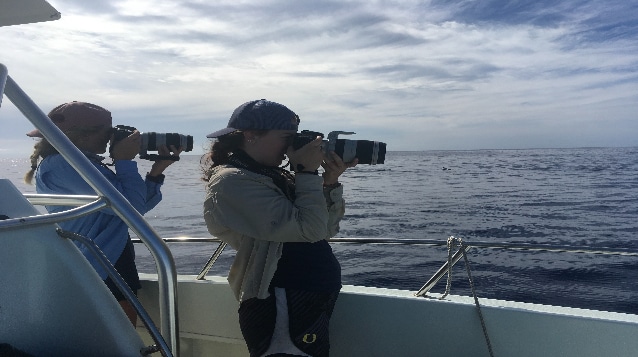
This internship combines office-based research with regular boat-based fieldwork. Interns will:
- Assist with photo-identification cataloging of whales and dolphins
- Input, organize, and quality-control research data using database software
- Learn to identify individual whales and dolphins from photographs
- Gain experience with marine mammal biology, ecology, and population monitoring
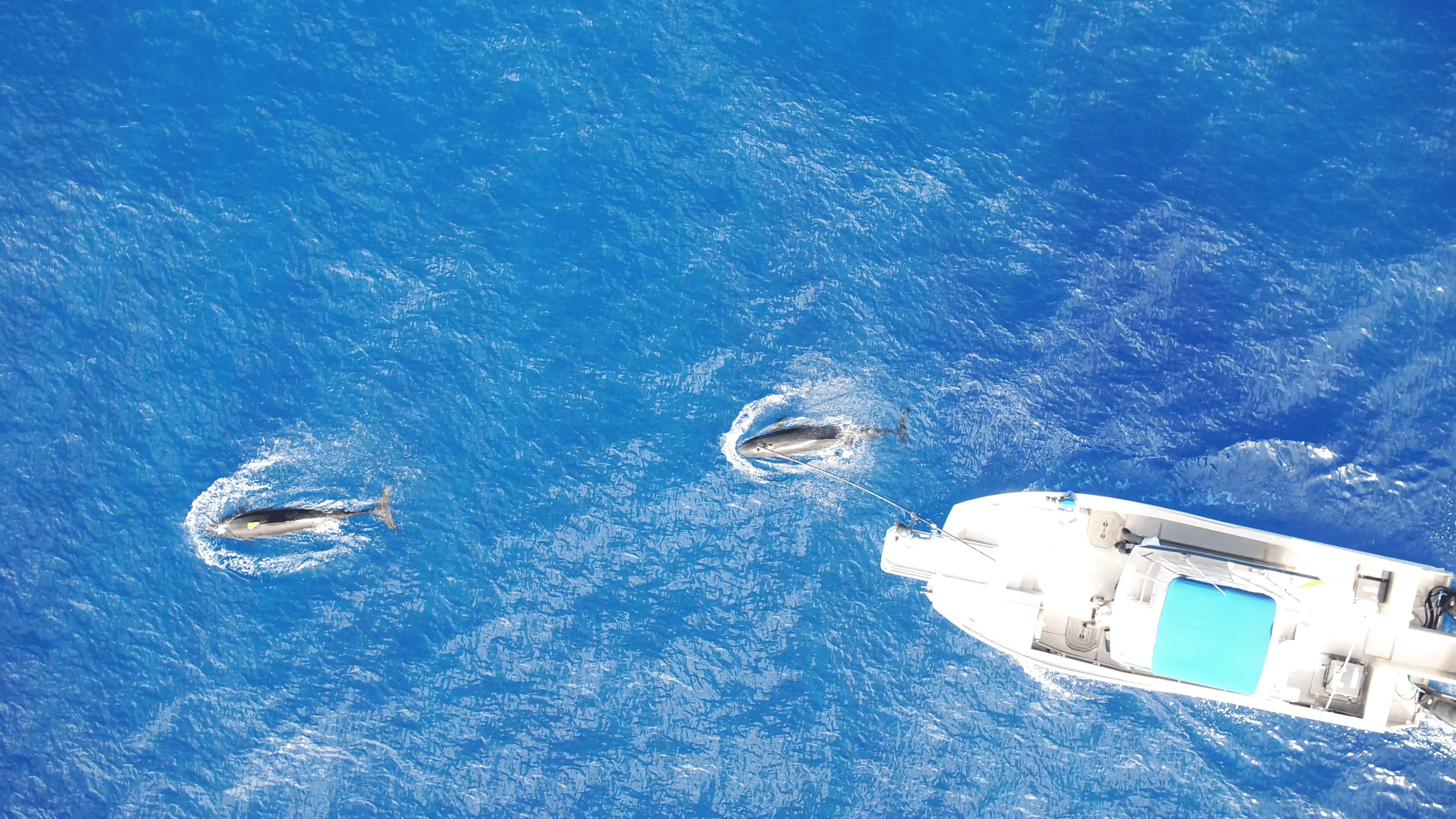
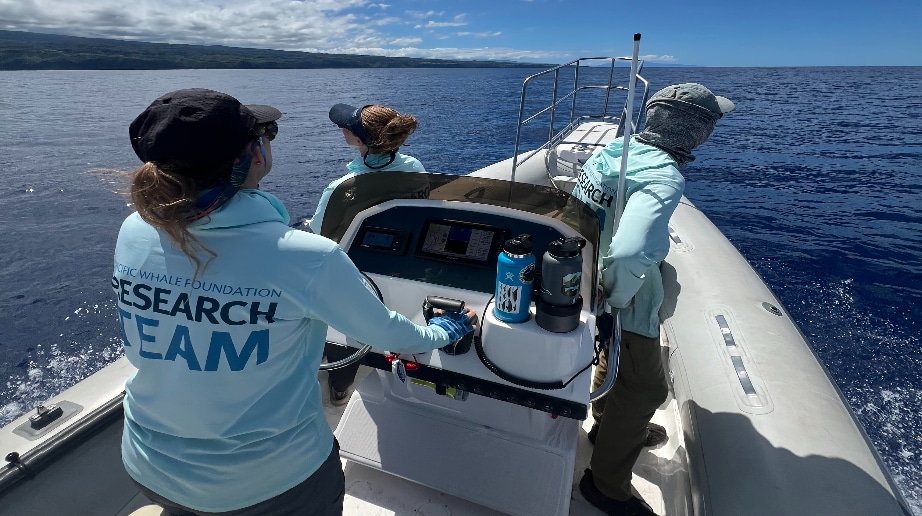
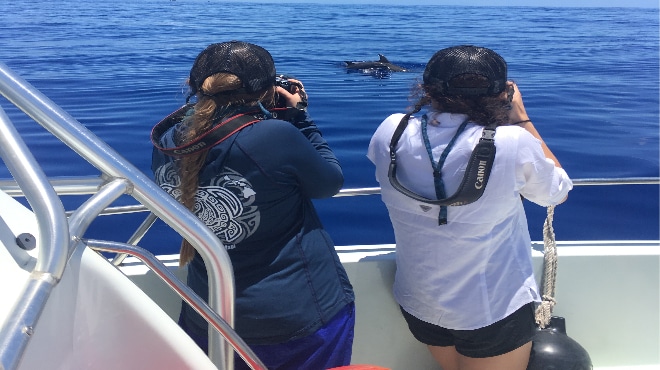
- Participate in field surveys to collect data on whales and dolphins using a variety of research techniques.
Field days may involve extended time on the water and in variable weather conditions. Interns should be comfortable carrying equipment and working outdoors in warm temperatures.
Qualifications
Applicants should meet the following criteria:
- Hold a university degree or be an advanced undergraduate in biology, marine biology, ecology, zoology, or a related field
- Be available full-time for the entire internship session
- Demonstrate a mature, professional attitude toward scientific research
- Be proficient with computers, including data entry and Microsoft Office
- Be comfortable performing repetitive, detail-oriented tasks for extended periods
- Possess strong organizational skills and a strong work ethic
- Be able to work independently and in a team environment, adaptable, and quick to learn new skills
- Be fluent in spoken and written English
- Have boating experience (preferred but not required)
Compensation and Logistics
- Stipend: $1,000 per month
- Housing: Not provided
- Travel and living expenses: Interns are responsible for their own costs
- Transportation: Public transportation is available on Maui
Eligibility
Applicants must be legally permitted to remain in the United States for the duration of the internship. International applicants may apply, but are responsible for securing any required visas or documentation.
Application Process
Interested candidates should submit the following materials:
- Cover letter (maximum 1 page) describing your motivation for applying and clearly indicating which internship session you are applying for
- Resume or CV (maximum 2 pages) outlining relevant education, experience, and skills
- Names and contact information for two professional or academic references
Please send all materials as a single PDF to [email protected] with the subject line:
- “Hawaiʻi Research Internship Application”
Please do not call or visit in person regarding applications. All applications will be reviewed after the application deadline. Applicants who require confirmation for academic credit prior to the closing date should note this in their cover letter.
Submission Deadlines
Winter/Spring Session Application deadline: October 15
Summer/Fall Session Application deadline: March 15
Hear from former Pacific Whale Foundation Research Interns
Sara Mach | March – July 2026
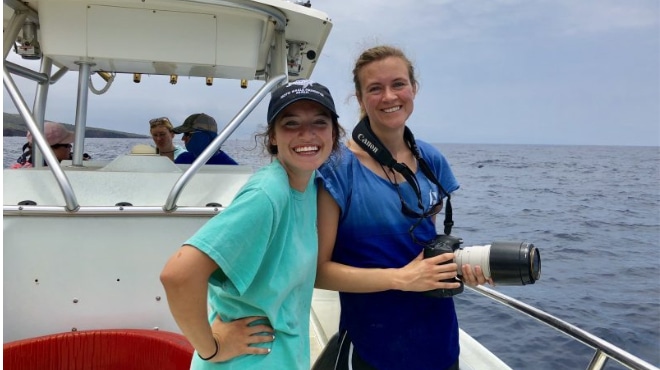
“I am so grateful for the opportunity to intern at Pacific Whale Foundation where I received firsthand experience in whale and dolphin research. Throughout my time as an intern, I helped collect data on 8 species of whales and dolphins, including the critically endangered Hawaiian population of False Killer Whales. In the office, my main task was to process photos of dolphin dorsal fins and match them to individuals in PWF’s sighting catalogs, which then can be used in many ongoing research projects. One of my favorite moments in the field was recognizing a specific individual in a group of short-finned pilot whales because I had previously worked in the office on photo ID for a couple encounters with that individual. The training process was thorough and well-paced so that I felt prepared and supported to preform my tasks to the high standard required for research. In my internship I acquired skills and experience that are directly applicable to my future work in marine mammal research as well as gained many connections in the fields of ocean science and conservation. Many thanks to everyone at PWF for being so incredibly kind and welcoming and for being stewards of marine mammal research, education, and conservation!”
Barbara Nainiger | May – August 2018
“Thank you for this wonderful experience! I’ve learned so much in the past few months thanks to everyone’s help. Being around people like you who have such a passion for the ocean and science is so inspiring and hopefully I’m able to take some of your passion and spread it around the world! Thank you so much for this opportunity!”
Jaclyn Doody | May – August 2018
“Thank you all so much for allowing me to join the team this summer! It has been great getting to know all of you and a lot of fun working here! I’m so grateful I had the opportunity to work at such a great organization, and I’m even more grateful for all of your instruction, guidance and patience in the field and lab. You all were awesome teachers and made it fun to be there, so thank you for that and everything you’ve done to make this an amazing experience. I can’t wait to volunteer in the fall!!”
Dylan Laicher | September – December 2016
Thank you for the amazing opportunity to intern with the Pacific Whale Foundation Research Team. It has been such a fulfilling and learning experience and has expanded my skillset in many ways.”
Holly Self | January – April 2016
“The internship with the PWF is a great opportunity to really be involved in current research in all its stages from collection to data handling. Interns get to learn and practice a variety of in-the-field and office based skills, and are involved in the ‘nitty gritty’ of real research. The length of the internship really gives the opportunity to become experienced in the tasks involved, rather than just being trained.
It is an excellent opportunity for those wanting to gain experience in order to pursue a career in research, as you’re genuinely taking part in the variety of research projects carried out at the PWF for the whole period- there’s really not much more you could ask for from such a program.”
Rachael Nidiffer | July – October 2016 and December – April 2015
“I was a research intern for Pacific Whale Foundation on Maui in 2015 and Hervey Bay, Australia in 2016. I was able to develop certain skill sets through basic boating practice and gain experience in behavioral observation that have led me to become a more confident and independent researcher. Both experiences were able to provide me with a good sense of office based research as well as data collection in the field. I have learned how to identify different mysticetes (whales) and odontocetes (dolphins) via photo-identification as well as how to take professional pictures for future photo-ID (e.g., lighting, angle). Days in the office are put to good use with matching individuals to photos from years past, as well as participating in multiple other projects that are going on throughout the research department, such as marine debris. Starting off as an intern and growing within the foundation has reassured me that hard work and long hours (while not all glamorous) do pay off. The opportunities the foundation has given me over the past couple years have left me with not only science/research experience, but also helped me to make science connections with people from around the world.”
Martin Narváez | December – April 2015
“My overall experience of this opportunity was beyond [what was] expected. I consider that the field experience gained on the boat working on transect lines was a great tool to take advantage of for people pursuing a marine research career. Field work experience is a fundamental aspect for graduate biologists or biology students. The various research projects help interns gather a lot of different skills at the office as well as the field.
In my personal life, this experience helped me develop my undergraduate dissertation work. I’m currently working on population dynamics of humpbacks whales in the Ecuadorian coast with the use of photo-identification”