
Here’s what our Outreach Team and volunteers accomplished alongside the Division of Forestry and Wildlife (DOFAW) between January and July.
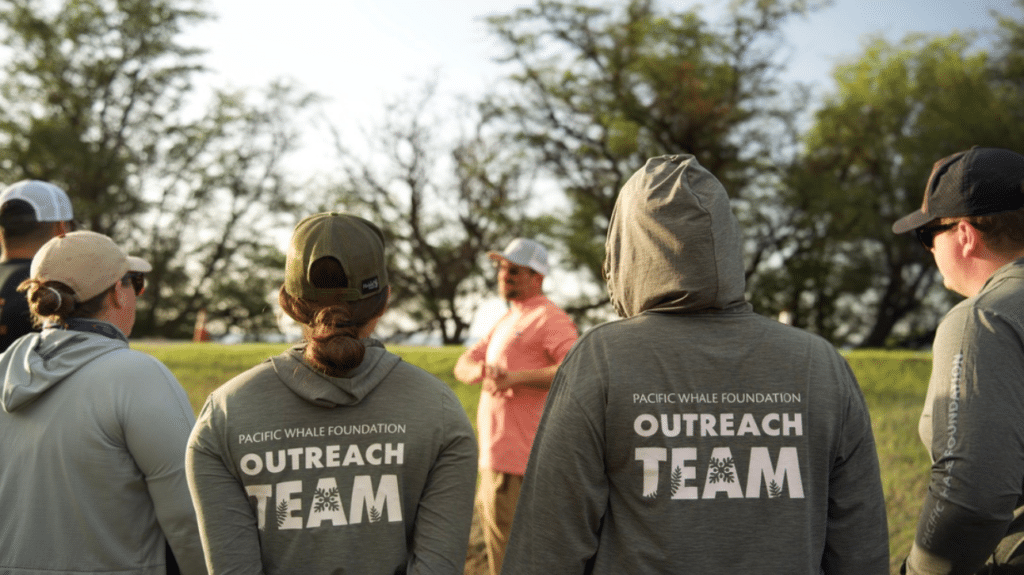
Earlier this year, at Olowalu, a small group of volunteers planted ʻulei, maʻo, and ʻākia; three of the hundreds of native plants that would eventually number in the thousands along this stretch of coastline. By the time the irrigation sprinklers clicked on at the end of the workday, cooling everyone down after a morning of digging and planting, we could start to envision the future of this area.
It was the start of a months-long steady, hands-in-the-soil partnership with DOFAW that would take our volunteers from roadside enclosures to mountain ridgelines and back again.
Replanting the Olowalu Coastline
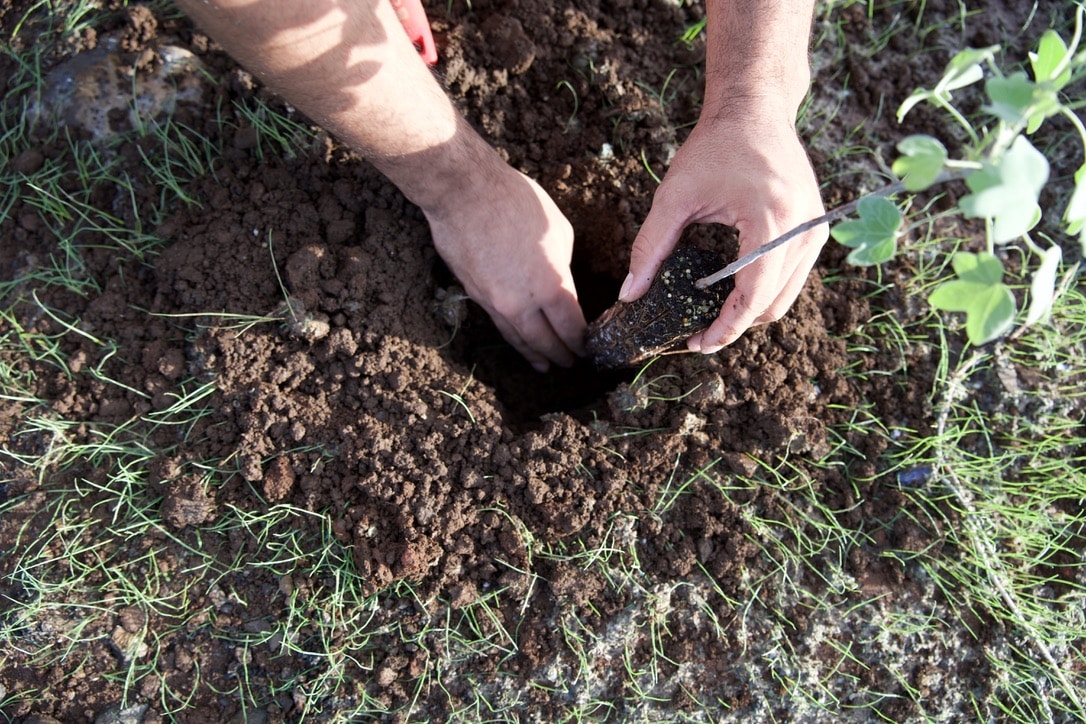
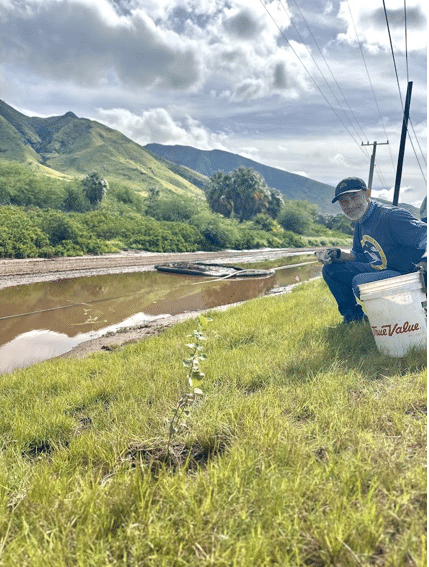
The early months of the year were almost entirely focused on one place: Olowalu. Volunteer groups, returned again and again to plant ʻaʻaliʻi, ʻūlei, ʻākulikuli, and naupaka along the roadside —work aimed squarely at planting native flora, discouraging unauthorized off-road driving, reshaping the landscape to help with fire mitigation, and helping indigenous and endemic species rebound in an area that has taken a lot of pressure over the years.
By February, the work moved slightly mauka (inland) into fenced enclosures, where volunteers added kou, ʻilima, naupaka kahakai, and more ʻākulikuli to the mix. By March, volunteers were planting naupaka and ʻaweoweo among plants that had been in the ground since the previous December, watching a project that started as bare, eroding roadside slowly fill in.
When a Storm Changes the Plan
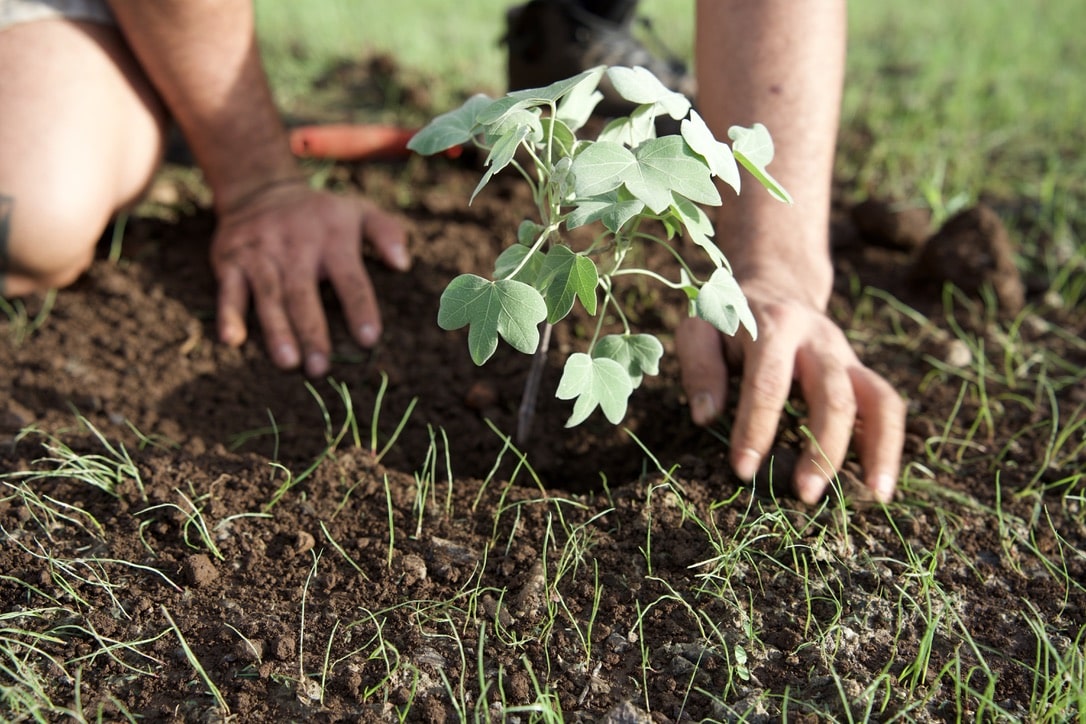
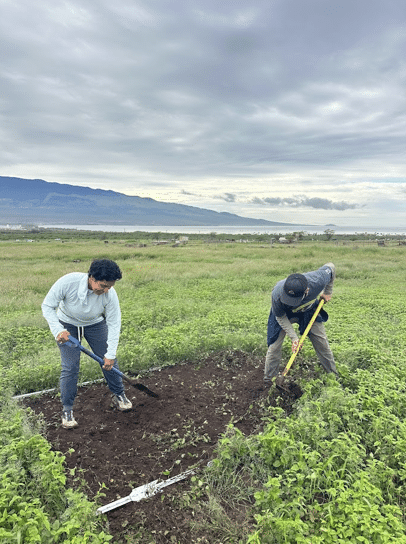
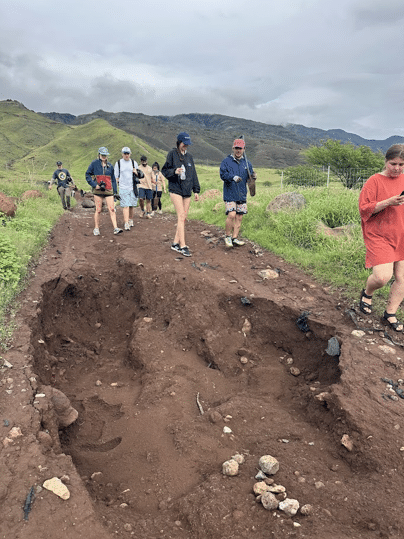
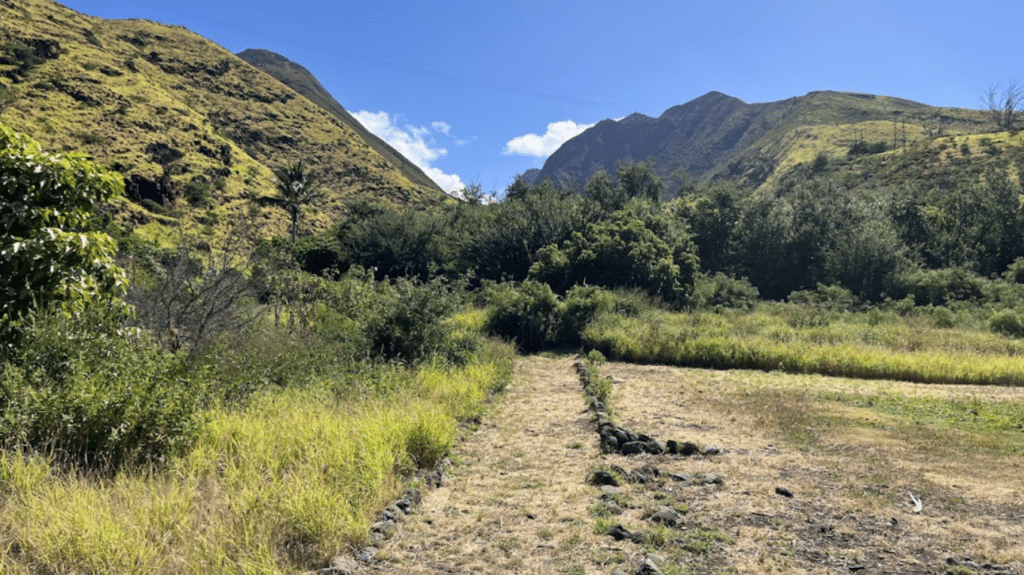
Restoration work doesn’t always go according to schedule. In March, storm damage in Olowalu sent the team instead to the Pōhakea area, hiking into fields at the base of Mauna Kahālāwai with fence posts, tools, and young wiliwili trees. Volunteers cleared ground and planted the trees while learning about the wiliwili’s role in the surrounding ecosystem.
That work continued in April, when the Outreach Team joined DOFAW and Mālama Pono volunteers to scour, plant, and fence eight wiliwili trees along the Kahālāwai slopes; trees that will eventually help anchor soil in place and provide canopy cover as they mature. DOFAW also has plans to bring in goats to graze down invasive grasses around the new trees, an organic alternative to chemical weed control.
In May, the wiliwili effort continued. Volunteers from around the world, including six keiki, joined DLNR-DOFAW for a planting day. Before anyone put a tree in the ground, the group learned about the wiliwili itself: a uniquely twisting tree, endemic to Hawaiʻi, that thrives in dry lowland forests and nearly went extinct. Historically, Hawaiians used wiliwili wood to build canoes, fishing gear containers, and surfboards, a reminder that restoration work is also cultural preservation.
Inside the Nursery
Not all of the work happens outdoors under the sun. In April, volunteers toured DOFAW’s nursery facility to understand how the organization’s future planting projects across Maui actually begin, filling dibbles with pili grass and māʻo hau hele. Pili grass plays a quiet but important role in slope stability, helping with water retention and drainage on hillsides. Māʻo hau hele, the Hawaii state flower, and endangered in the wild, is grown here from seed for eventual outplanting.
That relationship with the nursery deepened over the following months. During a dedicated Nursery Day in May, staff member Ramsey walked volunteers through different native species and their distinct root systems before six volunteers planted 241 plants in just two hours: six māʻo hau hele, 116 ʻulei, 69 keahi, 12 ʻuhaloa, 35 naupaka, one ʻaʻaliʻi, and two huehue. The following week, volunteers planted dibbles of ʻaweoweo and toured Ramsey’s developing fern propagation project, grown from spores collected under fern leaves, checking greenhouse stations for pest damage from snails along the way.
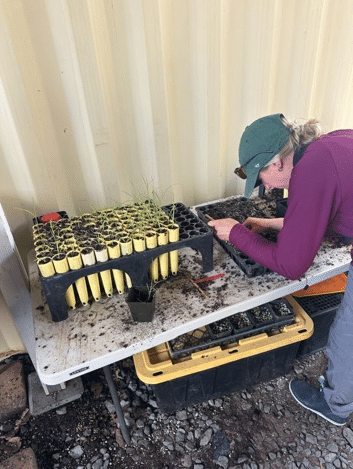
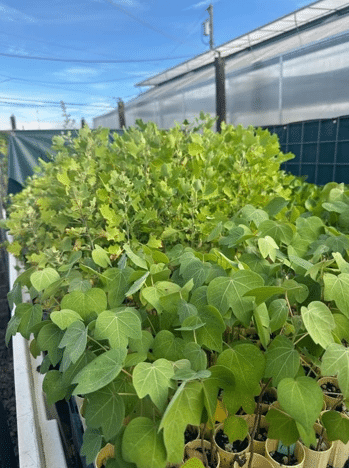
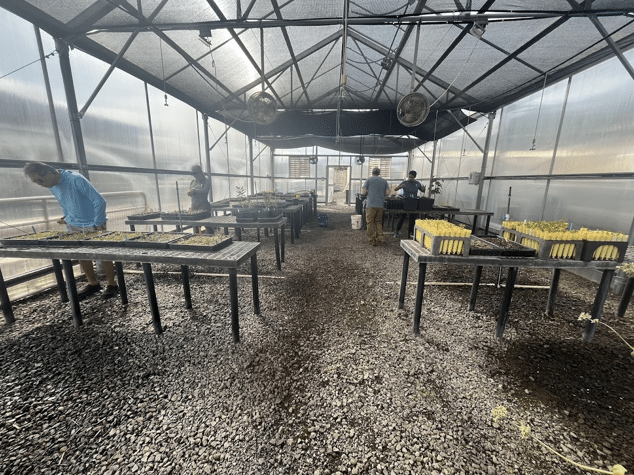
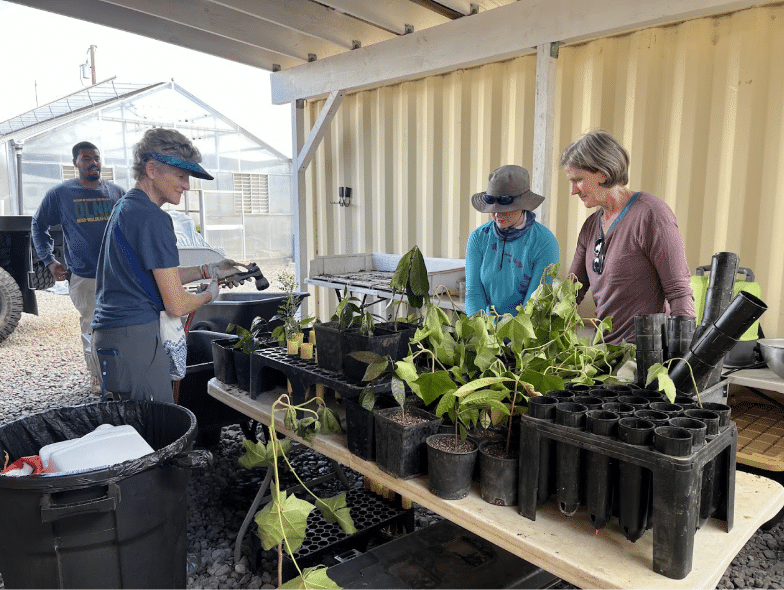
By late June, that early nursery work had matured. Volunteers repotted wiliwili trees into their final pots before field planting, checked in on a thriving batch of māʻo hau hele, and began germinating more wiliwili toward a grant goal of 700 potted trees. They also helped prepare koa and ʻiliahi (sandalwood) seeds collected by DOFAW from around Maui. In July, after several volunteers returned from the Conservation Conference on Oʻahu, the group planted wiliwili seeds gathered from Maui’s east side — and noticed something curious: some seeds floated in their storage jars while others sank. That observation turned into an informal experiment on whether seed orientation affects germination, with results still to come.
Watching the Work Grow
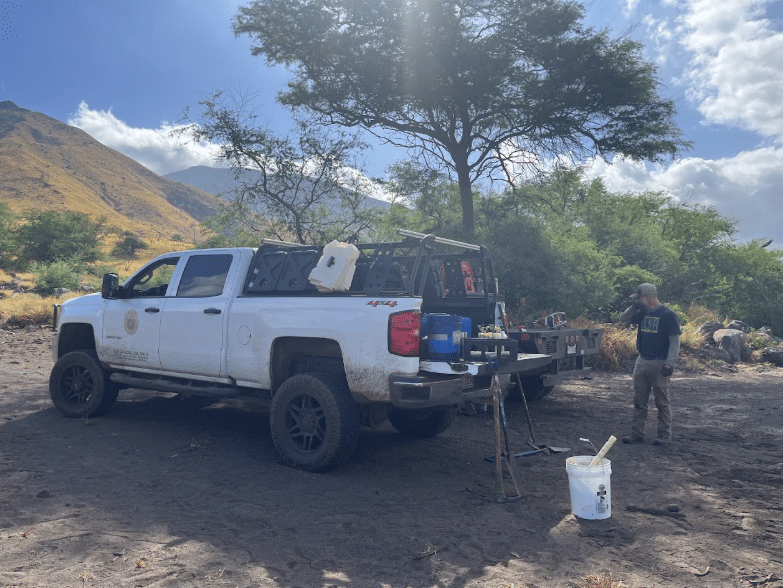
In June, volunteers spent a morning at the DOFAW base yard preparing for an upcoming community event, weeding and eventually repotting a critically endangered māʻo hau hele that had been grown from seed since April and was finally ready for its last stage before an outdoor planting that could see it grow more than twenty feet tall. Later that month, a group of new and visiting volunteers learned directly from DOFAW’s Matt and Chris about restoration efforts in Olowalu, observing that some plants were blooming in the early summer heat while others struggled to adjust to the harsh conditions of Maui’s west side.
A Full Circle Experience
By July, the throughline of the past eight months became clear. Volunteers planted maʻo, ʻākulikuli, ʻaweoweo, and naupaka kahakai in enclosures less than 100 yards from the ocean; plants expected to help revitalize the land, support wildlife, and reduce sedimentation on nearby reefs. Days later, volunteers joined DOFAW for a trip up the Hanaula ridgeline into Mauna Kahālāwai, gathering ʻōhiʻa seeds to bring back to the nursery, a small gesture marking a partnership built, as the team put it, on empathy, trust, and a shared passion for the ʻāina.
The season closed out with a planting day back in Olowalu, where ʻilima, kou, pōhinahina, loulu, and maʻo — plants nurtured in the very nursery volunteers had spent months working in — went into the ground at last. It was a full-circle moment: seeds and dibbles from the spring becoming outplanted natives by summer, cared for the entire way by the same hands.
How You Can Help
None of this happens without volunteers willing to show up, get dirty, and come back again the following month. If you’d like to be part of the next eight months of this work — planting, weeding, or spending a morning in the nursery, register below!